
Share now:
The controversial history of oil tycoon John D. Rockefeller
- Details
- 20 July 2018
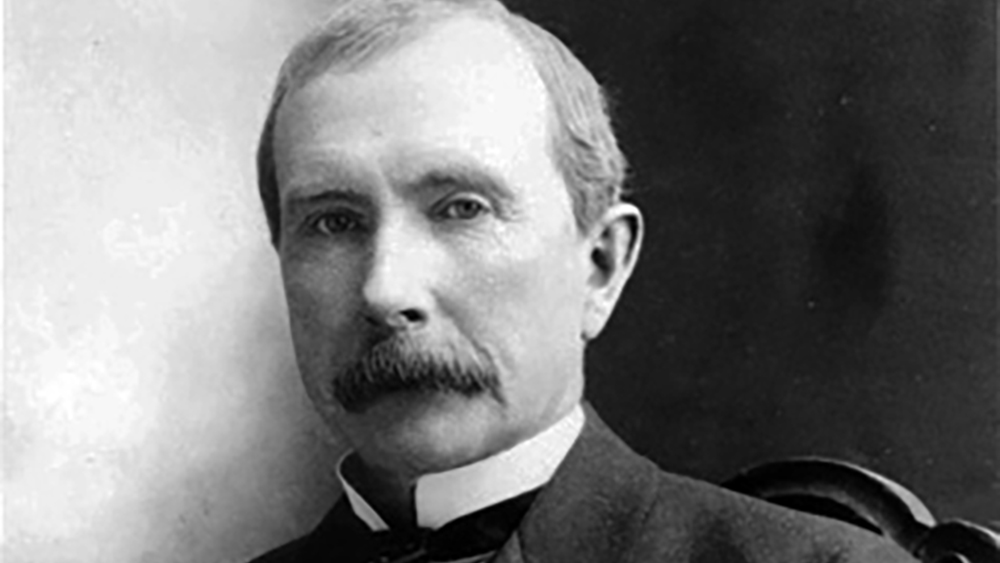
The Rockefeller name is deeply entrenched in American history, synonymous with summits of wealth and philanthropic generosity. You’d be hard fetched to find someone who hasn’t heard of the name or the family legacy. It all began, however, with the 16-year-old bookkeeper, John D. Rockefeller, whose goal in life was to earn $100,000 and live to be 100 years.
You see, John David Rockefeller was on the path to becoming the wealthiest man of his time, reigning over a monopoly that refined nearly 90% of USA’s oil. He was America’s first billionaire and the poster-child for capitalism. At the turn of the 20th century, when the average worker was earning $8 - $10 per week, Rockefeller was clearing millions. His tactics were brutal, and the man himself was ruthless, yet Rockefeller shaped modern oil production and fuel delivery service businesses.
The early years
John D. Rockefeller was born in 1839 in Moravia, a small town to the west of New York State. His father was dabbled in herbal medicine, creating remedies from plants in the area, while his mother, a devout Baptist, instilled in him a belief system that would last a lifetime.
After graduation, he was sent to a business school in Cleveland. He entered the workforce as a clerk at a shipping firm and saved enough money to start his own business in produce sales. Of course, this was the right business to be in as the civil war approached, and as the demand for produce increased, so did his profits.
The turning point into the oil industry for Rockefeller happened in 1859 when Edwin Drake discovered oil. Rockefeller was convinced refining oil would bring him the wealth he desired.
Standard Oil Company
The Standard Oil Company opened for business in 1870 with John going into partnership with his brother William, industrialist Henry Flagler, chemist Samuel Andrews and silent partners Stephen V. Harkness and Oliver Burr Jennings.
Focusing on oil production, transportation, refining and marketing, the Standard Oil Company quickly became the largest oil refinery of its time. In that time, they spread to neighbouring states, moved its headquarters to New York and focus on becoming a more efficient operation. Unlike their competitors, they used gasoline to fuel their machines instead of the common practice of dumping it in the river and recycled waste. With a team of chemists on hand, the company also developed ways to increase the type and quality of combustible fuels, refining oil into a vast array of products including diesel fuel, paint, hair gel and varnish.
Controversial business practices
The company wasn’t without controversy, with Rockefeller aggressively buying smaller companies to grow his own. It was a “move that pioneered modern American capitalism” writes Sam Parr for The Hustle. Rockefeller had secret deals with railroads which allowed him to ship at a better price than his competition and by the early 1900’s, his company controlled 90% of the market. Rockefeller once said “competition is a sin” and he certainly did his part to stamp out the “sin”.
Some of his practices included:
- Buying up all the oil barrels which subsequently caused a shortage and crippled small, local businesses
- Scheming price wars between exclusively-owned subsidiaries
- Using his partnership with the railroad companies to limit the number of trains available for shipment
- Purchasing all oil refining equipment and their suppliers, while refusing to sell replacement parts to competitors
His monopoly was too good to be true, however. In 1909, the US Department of Justice sued Standard Oil Company under federal anti-trust laws, the Sherman Antitrust Act which can into effect in 1890, for sustaining a monopoly and restraining interstate commerce.
Two years of court battles resulted in the US Supreme Court upholding the lower court judgement declaring the Standard Oil Co to be an “unreasonable” monopoly. The company dissolved under the ruling and split into 34 companies. Some of those successor companies would eventually transform into BP Plc, ExxonMobil and Chevron
Philanthropy
Despite his long and controversial career in the oil business, he dedicated much of his life to philanthropy. He was an ardent abolitionist before the Civil War and was dedicated to supporting the underground railroad. In 1884, he funded the Atlanta Baptist Female Seminary for African-American women, which later became Spelman College. Education was important to Rockefeller and over the years he gave $80 million to Chicago University, founded the Rockefeller Institute for Medical Research and the Rockefeller Foundation. He gave $250 million to the foundation which focused on public health, medical training and the arts.
The Rockefeller family remain one of the wealthiest families in the world, pouring much of their wealth into real estate including the Museum of Modern Art, Rockefeller Center and most of the Ivy League colleges.
For round-the-clock on-site refuelling of your fleet and to take advantage of wholesale fuel prices, call Bulk Fuel Australia today on 1300 579 990.